
Falling Snow Piano Sheet Music:What is falling snow piano sheet music and why is it popular among pianists?
Q: What is falling snow piano sheet music and why is it popular among pianists?
A: Falling snow piano sheet music refers to piano arrangements that evoke the gentle, serene atmosphere of snow falling, often characterized by soft arpeggios, delicate melodies, and a tranquil mood. These pieces are popular because they capture a peaceful, reflective feeling that resonates with both players and listeners. Many composers and arrangers, such as those in the New Age and contemporary classical genres, have created works with titles like 'Falling Snow' or similar themes. Pianists enjoy them because they are often accessible to intermediate players while still offering expressive depth. The music typically uses sustained pedal, light touch, and flowing patterns to mimic the quiet drift of snowflakes. Additionally, such sheet music is frequently used for seasonal performances, holiday recitals, or simply for personal relaxation. Its popularity also stems from the rise of piano covers on platforms like YouTube, where arrangements of falling snow themes by artists like Yiruma or Ludovico Einaudi gain millions of views. Whether you're a beginner or advanced pianist, falling snow piano sheet music offers a beautiful way to convey winter's magic through the keys.
Q: Where can I find free falling snow piano sheet music online?
A: You can find free falling snow piano sheet music on several reputable websites, though availability varies depending on copyright. For public domain pieces, sites like IMSLP (International Music Score Library Project) offer classical works that evoke winter, such as Tchaikovsky's 'December' from The Seasons. For contemporary pieces titled 'Falling Snow,' many are protected by copyright, so free versions may be arrangements shared by independent creators. Platforms like MuseScore.com host user-uploaded sheet music, including original compositions and arrangements with 'falling snow' themes; you can filter by free scores. Similarly, 8notes.com and PianoNanny.com provide free beginner to intermediate sheets, some with winter motifs. YouTube tutorials often include links to downloadable PDFs in the description, though always verify legality. For popular songs like 'Falling Snow' by artists such as Michele McLaughlin, free sheets are rare, but you might find simplified versions on blogs or forums. Always respect copyright: if the sheet is not explicitly free, consider purchasing it to support the composer. Additionally, check your local library's digital resources—some offer free access to sheet music databases. With a bit of searching, you can build a collection of falling snow piano pieces without spending money, but be prepared to sift through options and ensure the arrangements match your skill level.
Q: How do I play falling snow piano sheet music effectively to capture the right mood?
A: To play falling snow piano sheet music effectively, focus on creating a delicate, atmospheric sound that mirrors the quiet descent of snow. Start by analyzing the score: most such pieces are in slow to moderate tempos (60-80 BPM) with flowing arpeggios or broken chords. Use a light touch—let your fingers glide rather than press heavily. The sustain pedal is crucial; change it frequently to avoid muddying harmonies, but hold it enough to let notes ring and blend, simulating snowfall's continuous motion. Dynamics should be soft (piano or pianissimo) with subtle swells to mimic drifting flakes. Pay attention to phrasing: imagine each musical line as a snowflake's path, with gentle rises and falls. Practice hands separately to master the arpeggio patterns, then combine slowly. For expression, avoid harsh accents; instead, use rubato sparingly to enhance the dreamy quality. Listening to recordings of similar pieces (e.g., by Einaudi or Yiruma) can guide your interpretation. Finally, relax your wrists and arms to maintain fluidity—tension will ruin the ethereal effect. With consistent practice, you'll convey the serene, magical feeling that makes falling snow piano music so captivating.
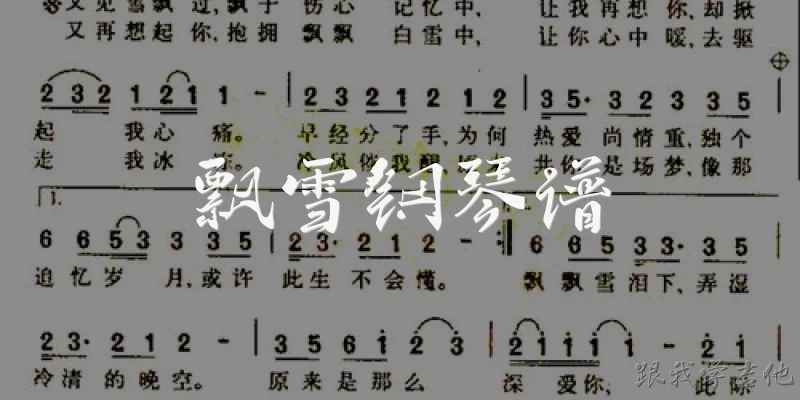
Dialogue about
Common scenarios of "Falling Snow Piano Sheet Music"
【Piano Teacher】 Hey, I heard you're looking for the sheet music for 'Falling Snow'. Are you a beginner or more advanced?
【Student】 Hi! I'm at an intermediate level. I've been playing for about three years. Is 'Falling Snow' difficult?
【Piano Teacher】 It's a beautiful piece by Tomohisa Okudo. It's not too hard, but it has some expressive parts that require good control. Have you listened to it?
【Student】 Yes, I love the version from the anime 'Kanon'. It's so emotional. Do you know where I can find the sheet music?
【Piano Teacher】 You can find it on sites like Musicnotes or Sheet Music Plus. There's also a free version on MuseScore, but the quality varies. I recommend the official one.
【Student】 I see. Is the official version in the original key? I think it's in D major or something.
【Piano Teacher】 Actually, the original is in E major, but many arrangements transpose it to C major for easier playing. Which key do you prefer?
【Student】 I'd like to play it in the original key. E major has four sharps, which is manageable. But I'm worried about the fingerings.
【Piano Teacher】 The fingerings are marked in most published versions. If you get the one from Yamaha, it's well-fingered. Also, watch out for the left-hand arpeggios.
【Student】 Thanks for the tip. Do you think I can learn it in a month if I practice an hour a day?
【Piano Teacher】 Absolutely, if you focus on the tricky sections. Start with the first page, which is repetitive. The middle section has some syncopation.
【Student】 Syncopation? I struggle with that. Any advice?
【Piano Teacher】 Practice slowly with a metronome. Count out loud. Once you get the rhythm, speed up gradually. Also, listen to recordings to internalize the feel.
【Student】 I'll do that. By the way, is there a pedal marking? The piece needs a lot of sustain.
【Piano Teacher】 Yes, the pedal is crucial. Use half-pedaling to avoid blurring. The sheet music usually indicates pedal changes with asterisks or lines.
【Student】 Got it. I think I'll order the Yamaha version. Is it available online?
【Piano Teacher】 Yes, on Yamaha's website or Amazon. It's part of the 'Piano Solos' collection. Make sure it's the solo piano version, not the easy piano.
【Student】 I'll check that. Thanks so much for your help! I'm excited to start learning it.
【Piano Teacher】 You're welcome! Send me a recording when you're ready. I'd love to hear your interpretation.
【Student】 I will! Maybe in a few weeks. Thanks again!