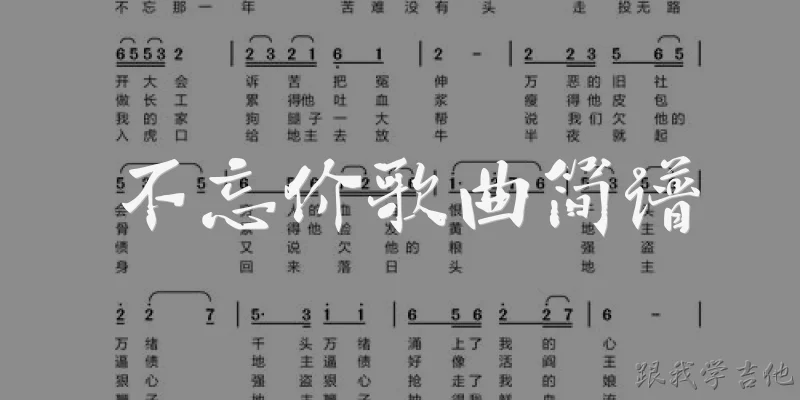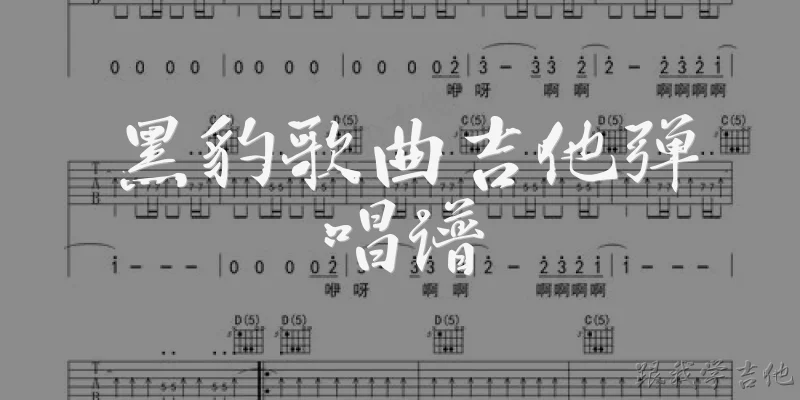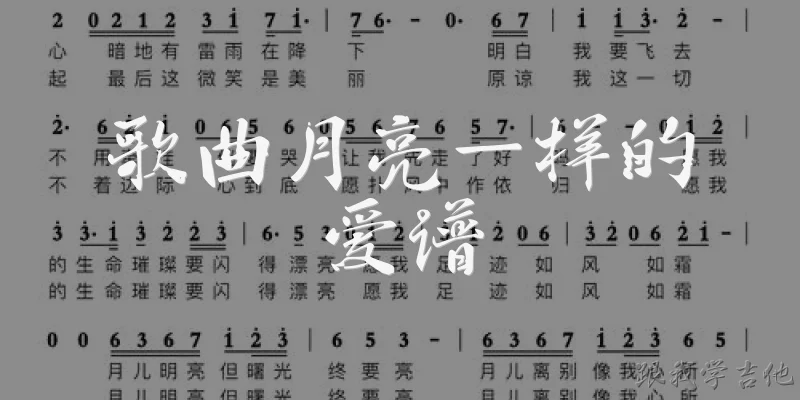
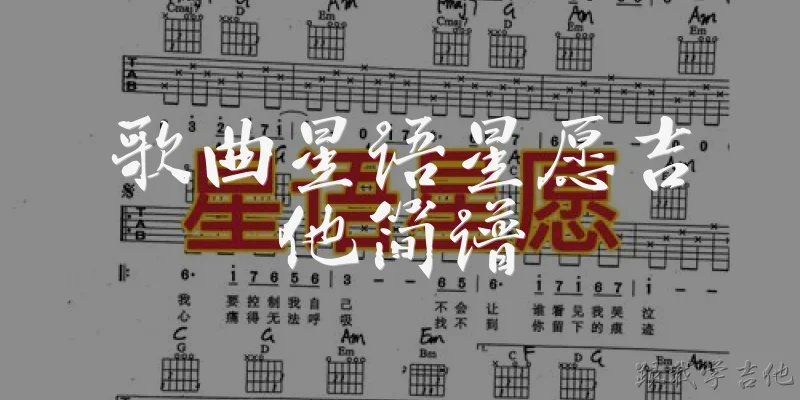
Guitar Numbered Musical Notation for the Song Xing Yu Xing Yuan:What is guitar numbered musical notation for the song Xing Yu Xing Yuan?
Q: What is guitar numbered musical notation for the song Xing Yu Xing Yuan?
A: Guitar numbered musical notation, often called jianpu in Chinese music, is a system that uses numbers 1 through 7 to represent the solfège notes do, re, mi, fa, sol, la, and ti. For the song Xing Yu Xing Yuan, which translates to 'Stars and Wishes' or 'Meteor Shower,' this notation provides a simplified way for guitarists to play the melody without needing standard staff notation. In jianpu for guitar, each number corresponds to a fret on a specific string, and additional symbols like dots above or below indicate higher or lower octaves. The notation may also include rhythm markers such as underlines for shorter note values and dashes for longer ones. For Xing Yu Xing Yuan, a gentle pop ballad, the numbered notation typically outlines the vocal melody, allowing guitarists to fingerpick or strum along. Many online tutorials and sheet music sites offer jianpu versions tailored for guitar, often with chord diagrams. This makes it accessible for beginners who are familiar with numbered notation but not yet comfortable reading traditional sheet music.
Q: How do I read and play the guitar numbered notation for Xing Yu Xing Yuan?
A: To read guitar numbered notation for Xing Yu Xing Yuan, start by understanding that each number 1–7 represents a scale degree. On guitar, you need to map these numbers to specific strings and frets, usually based on the key of the song. For example, in the key of C, 1 is the open third string (G string) if playing in first position, but this can vary. Many jianpu arrangements for guitar include string and fret indications, such as numbers with small circles or Roman numerals. Rhythm is shown by underlines: a single underline means an eighth note, double underline a sixteenth note, and a dot after a number extends its duration by half. For Xing Yu Xing Yuan, the melody often moves stepwise, so you can play it on the first three strings. Start slowly, plucking each note as indicated. Pay attention to octave dots—a dot above a number means play it an octave higher than the base octave. Practice the melody separately, then add chords if provided. Since jianpu is key-agnostic, you can transpose it easily by shifting all numbers. Use a metronome to internalize the rhythm, and soon you'll be able to play the song smoothly.
Q: Where can I find guitar numbered musical notation for Xing Yu Xing Yuan?
A: You can find guitar numbered musical notation for Xing Yu Xing Yuan on several Chinese music education websites, forums, and video platforms. Popular sites like 17jita, GuitarTab, and Jianpu123 often host user-submitted jianpu arrangements for popular Chinese songs. Search for '星语心愿 吉他简谱' (Xing Yu Xing Yuan guitar jianpu) to get relevant results. YouTube also has tutorial videos where instructors display the numbered notation on screen while demonstrating on guitar; you can pause and copy the notation. Additionally, apps like iJianpu or Jianpu Player offer interactive jianpu that you can play back at different speeds. For a more reliable source, consider purchasing a guitar songbook that includes jianpu for Chinese pop classics. If you prefer standard notation, many of these resources also provide tabs or staff notation. Always check the key and tuning—most jianpu for guitar assumes standard tuning (EADGBE). Since copyright may apply, ensure you use these materials for personal practice only. Joining guitar communities on Baidu Tieba or WeChat groups can also lead to shared files and tips from other players.
Words of experience
Common scenarios of "Guitar Numbered Musical Notation for the Song Xing Yu Xing Yuan"
【Beginner】 Hey, I'm trying to learn 'Xing Yu Xing Yuan' on guitar, but I'm confused about the numbered musical notation. Can you help?
【Expert】 Sure! Numbered musical notation (jianpu) is quite common for Chinese songs. What specifically are you struggling with?
【Beginner】 I have the jianpu sheet, but I don't know how to map the numbers to guitar frets. For example, the first line is 3 5 6 5 3 2 1.
【Expert】 That depends on the key. Usually, in jianpu, 1 corresponds to the tonic. If the song is in C major, then 1 is C, 2 is D, 3 is E, etc. On guitar, you can play these notes on various strings.
【Beginner】 So if it's in C major, 3 would be E. On which string should I play it?
【Expert】 You can play E on the open 1st string (high E), or on the 2nd string 5th fret, or 3rd string 9th fret, etc. For beginners, open strings and first position are easier.
【Beginner】 Okay, so for the melody 3 5 6 5 3 2 1, I could play: 3 on open 1st string? Wait, 3 is E, so open 1st string is E. 5 is G, which is 3rd fret on 1st string. 6 is A, 2nd fret on 3rd string? That seems jumpy.
【Expert】 Yes, that's a bit jumpy. You might want to play in a higher position to keep it smooth. Alternatively, you can transpose to a easier key like G major, where 1 is G. Then 3 is B, 5 is D, etc.
【Beginner】 How would I play it in G major? Can you give me the fret numbers?
【Expert】 In G major, 1=G, 2=A, 3=B, 4=C, 5=D, 6=E, 7=F#. For the melody 3 5 6 5 3 2 1, you could play: 3=B on 2nd string 4th fret? Actually, B is 2nd string 4th fret? Wait, 2nd string is B, so open 2nd string is B. That's 3. 5=D on 2nd string 3rd fret? No, D is 2nd string 3rd fret? 2nd string open is B, 1st fret C, 2nd fret C#, 3rd fret D. Yes. 6=E on open 1st string. 5=D again on 2nd string 3rd fret. 3=B open 2nd string. 2=A on 3rd string 2nd fret. 1=G on 3rd string open. That works.
【Beginner】 That seems doable. But how do I know the rhythm? The jianpu has underlines and dots.
【Expert】 Underlines indicate note duration: one underline means eighth note, two means sixteenth, etc. Dots after a number add half the value. Also, dots above or below indicate octave. You need to interpret those to get the rhythm.
【Beginner】 I see. So if there's a dot after a number, it's a dotted note. What about the song's tempo?
【Expert】 The tempo is usually indicated at the top, like 'Moderato' or a BPM. If not, you can listen to the original song to get a feel. 'Xing Yu Xing Yuan' is a slow, emotional song, so play it gently.
【Beginner】 Got it. Are there any specific techniques for this song? Like hammer-ons or slides?
【Expert】 It depends on your arrangement. For a simple version, you can just play the melody notes. For a more expressive version, you might add slides between notes, especially in the vocal-like phrases. But start simple.
【Beginner】 Okay. Can you show me the first few bars in tablature? That would help me visualize.
【Expert】 Sure, in G major, first bar: 3 5 6 5 could be: B (open 2nd string), D (3rd fret 2nd string), E (open 1st string), D (3rd fret 2nd string). So tab: e|--0--3--0--3--| B|--0--3--0--3--|? Wait, that's not right. Let me redo: Actually, B is open 2nd string, so that's 0 on B string. D is 3rd fret on B string. E is open 1st string. D is 3rd fret on B string. So tab: B string: 0-3-0-3, but E is on high E string, so you need to switch strings. It's easier to play in a fixed position. Maybe play all on 1st string: B is 7th fret, D is 10th fret, E is 12th fret. That's high. Alternatively, use multiple strings.
【Beginner】 This is getting complicated. Maybe I should just stick to the jianpu and figure out the notes on the fretboard as I go.
【Expert】 That's a good approach. Practice slowly, and soon you'll memorize the fretboard. Also, try using a capo to change the key easily. If you put a capo on the 2nd fret, you can play in A major with G major shapes. That might make it easier.
【Beginner】 Thanks for the tips! I'll try that. One last question: how do I read the jianpu when there are multiple notes stacked vertically? Like chords?
【Expert】 In jianpu, stacked numbers indicate a chord. You play them simultaneously. On guitar, you'd need to find a fingering that allows you to play those notes together. That might require some arrangement. For a melody-focused song like this, you might not encounter many chords in the jianpu; it's mostly single notes.