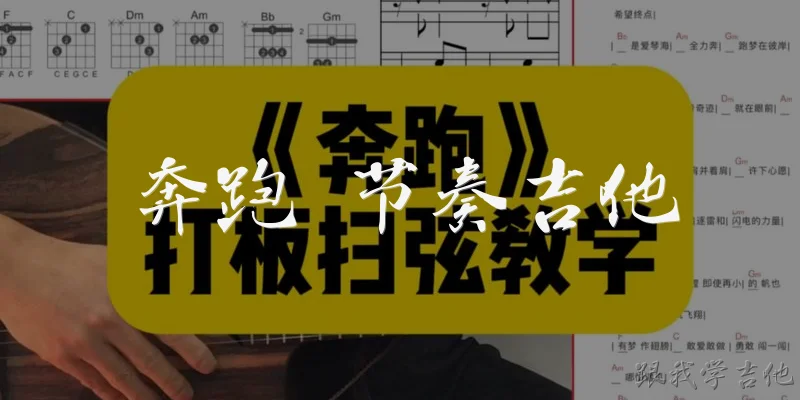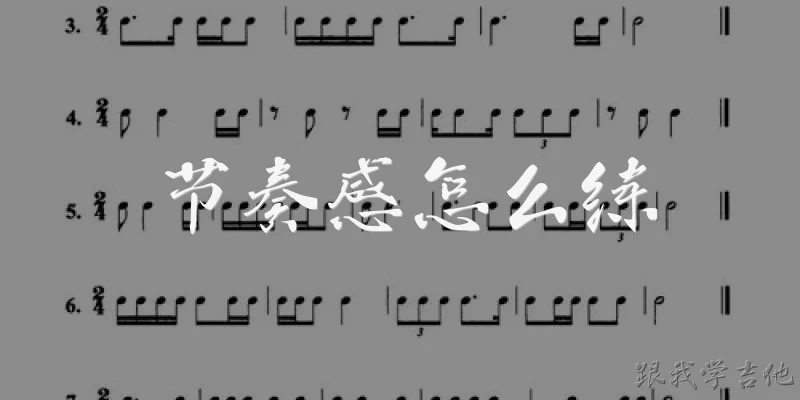
How to Practice Rhythm on Guitar:What is the best way to practice rhythm on guitar for beginners?
Q: What is the best way to practice rhythm on guitar for beginners?
A: For beginners, the best way to practice rhythm on guitar is to start with a metronome at a slow tempo, such as 60 BPM. Begin with simple downstrokes on a single chord, focusing on hitting the beat exactly. Once comfortable, add upstrokes to create a steady down-up pattern. Practice this for five minutes daily, gradually increasing speed. Next, learn basic strumming patterns like the universal strumming pattern (down, down-up, up-down-up). Count out loud: '1, 2 and, 3 and, 4 and.' This helps internalize the rhythm. Also, practice with muted strings to isolate your strumming hand from fretting. Record yourself to hear timing issues. Finally, play along with simple songs at a slow tempo, such as 'Knockin' on Heaven's Door.' Consistency is key: short, focused sessions beat long, sporadic ones. Within weeks, you'll notice improved timing and feel.
Q: How can I improve my rhythm guitar timing and feel?
A: To improve timing and feel, practice with a metronome or drum machine daily, but don't just play on the beat—practice placing notes slightly ahead or behind to develop groove. Subdivide the beat: count sixteenth notes (1 e and a) while strumming. Use a looper or recording app to layer rhythm parts and hear discrepancies. Play along with recordings of your favorite drummers, focusing on locking in with the kick and snare. Exercise: set metronome to click on beats 2 and 4 only (backbeat) to internalize the pulse. Also, practice different rhythmic feels: straight, swing, shuffle, and syncopation. For feel, work on dynamics—accent certain strums. Try the 'muted strum' exercise: strum muted strings in a pattern while counting aloud. Finally, play with other musicians; live interaction forces you to listen and adjust. Consistent practice with these methods will sharpen your timing and give your playing a professional feel.
Q: What exercises can help me practice rhythm guitar without a metronome?
A: Even without a metronome, you can practice rhythm effectively. First, use your foot as a steady pulse—tap it consistently and align your strumming with it. Count out loud: '1, 2, 3, 4' to internalize the beat. Practice strumming patterns on muted strings while watching TV or listening to music; this builds muscle memory. Another exercise: play a chord progression and focus on keeping your strumming hand moving in constant down-up motion, even when you don't strike the strings. This 'ghost strumming' helps maintain rhythm. Use a clock with a second hand: strum once per second, then twice per second, etc. Play along with songs—no metronome needed—and try to match the drummer. Record yourself and clap or tap along to check timing. Finally, practice call-and-response: strum a pattern, then try to replicate it exactly. These methods train your internal clock, making you a more reliable rhythm player.

Words of experience
Common scenarios of "How to Practice Rhythm on Guitar"
【Teacher】 Hey, ready to work on your rhythm today?
【Student】 Yes! I've been struggling to keep a steady beat when I play chords.
【Teacher】 That's common. First, let's make sure you can tap your foot consistently to a metronome.
【Student】 Okay, I'll set it to 60 BPM. Like this?
【Teacher】 Exactly. Now, try strumming muted strings on each click. Just downstrokes.
【Student】 Got it. It feels a bit robotic, but I can do it.
【Teacher】 Good. Now add upstrokes between the clicks. So down on the beat, up on the offbeat.
【Student】 That's harder. I keep losing the upstroke timing.
【Teacher】 Slow down to 50 BPM. Focus on the motion, not speed.
【Student】 Okay, that's better. I'm getting a steady down-up pattern.
【Teacher】 Great. Now let's try a simple chord progression: G, C, D. Strum each chord for four beats.
【Student】 I'll try. G... C... D... I'm rushing the chord changes.
【Teacher】 That's okay. Count out loud: 1, 2, 3, 4. Change on the 1.
【Student】 1, 2, 3, 4, change... That helps a lot!
【Teacher】 Now, let's add a little dynamics. Accent the first beat of each chord.
【Student】 So strum harder on beat 1? Like this?
【Teacher】 Yes, that gives it a pulse. Practice that for a few minutes.
【Student】 I'm feeling more confident. Should I try with a song?
【Teacher】 Absolutely. Pick a simple song like 'Knockin' on Heaven's Door' and apply the same rhythm.
【Student】 Awesome, I'll work on that. Thanks for the tips!